
Hey there,
Happy Friday. Welcome to Brand to Demand, where I break down what I've learned about B2B media and how you can use it to drive demand for your business. Content marketing? Sure, that's where we started. But things have changed.
For the past three years, I've been behind the scenes, working with an incredibly talented team, growing the HubSpot Media Network. Together, we've blended the SEO-driven content of HubSpot Blogs with the editorial personality of The Hustle and My First Million. It's been a balancing act, but it's shifting how we think about content.
Running a media company within a customer acquisition model isn't easy. Just ask anyone at Sherwood. But I believe this hybrid approach, blending editorial with performance, is how B2B brands will grow in the future.
Why is B2B content marketing changing?
So much of the media landscape is changing:
- AI is reshaping search.
- Consumers are shifting to video platforms like TikTok and YouTube.
- And most of the newsletters I read now come from independent voices on platforms like Substack or beehiiv.
With so many options, audiences are more selective, choosing only a few trusted sources. So, for marketers, the big question is: How do you break through and reach prospects where they already spend time reading, watching, or listening?
What was the old content marketing model?
The old content marketing model worked for a long time:
- Conduct keyword research for both transactional and informational keywords.
- Focus on medium to low difficulty keywords and organize them into content clusters to build authority on core topics.
- Reverse-engineer content based on what's ranking well.
- Write SEO-optimized content that includes facts, general knowledge, and industry examples.
But if you've been scrolling LinkedIn lately, you've probably seen posts about falling traffic and the diminishing impact of SEO on growth. That's because the old model was all about performance, not brand-building. The traffic we pulled in was reliable but short-lived. As algorithms evolve and consumer habits shift, relying solely on organic search is risky for long-term growth.
The good news? We've adapted. We're now blending growth tactics with editorial intuition to find a new way forward.
What does a B2B media strategy look like now?
The new content marketing model borrows from B2B media, but it's not the typical trade publications with endless awards and event recaps. As Brian Morrissey says, it's about becoming a publisher "that helps people do their jobs better and advance their careers."
I see a real opportunity here for B2B brands to step up and become the go-to digital publisher in their industry. To do that, we need to move beyond general knowledge articles that AI can spit out in seconds. Instead, we should focus on expert commentary and educational explainers: content people actually look forward to each week.
At HubSpot, we've taken this idea and run with it. While we still anchor our strategy around search (Google's E-E-A-T guidelines), we give our content teams the flexibility to apply their editorial judgment. Our writers and producers are more like beat reporters or journalists. They dive deep, research thoroughly, and offer new perspectives.
How do you blend SEO and editorial in a content brief?
Here's an example of how we might tackle a content brief on LinkedIn growth strategy:
- Objective: Position HubSpot as a LinkedIn marketing expert. Attract and convert readers into content leads.
- Audience: Digital marketers at scale-ups
- Content cluster: LinkedIn Marketing
- Keyword: linkedin growth strategy (4K searches/month in 2024)
- Intent: People are looking for an expert point of view on how to build a LinkedIn presence to grow their career or business.
- Editorial angle: The Founder of HockeyStack Reveals His LinkedIn Strategy That Delivers X Demos Per Month
While keyword research helps guide topic selection, it's our editorial team that shapes the coverage, as long as they align with the intent. The intricate balance between topic, intent, and editorial angle is a discussion for another time.
Where growth and editorial meet
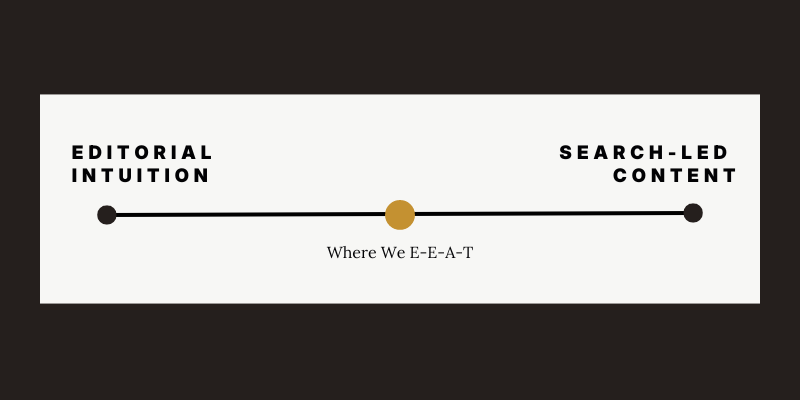
I believe the future of content marketing lives at the intersection of growth and editorial. Right now, though, these two approaches often clash. Growth marketers find the editorial style foreign, while beat reporters push back on search-led topics. But when we align our topics, keywords, and editorial angles, that's where the magic happens. We can create content that not only offers fresh perspectives for the audience but also continues to perform for the business.
If this is something you're working on, I'd love to hear your thoughts. We're all figuring out what works best for our businesses, and I'm learning as much as I'm sharing.
Catch you later ✌️
Kyle
P.S. If you want to learn more about how the HubSpot Blog is combatting SERP volatility, check out this deep dive from our Managing Editor, Meg Prater. Her team is doing incredible work.